The Modern Public Square is a Personalized Digital Hyper Matrix
Measuring participation is only 25 years old
Measuring participation is only 25 years old
The public square is a term used to describe a physical or common space where people gather to engage in discussions, debates, and other forms of public discourse. For the first 225 years of American democracy, the public square referred to a physical space in a city or town, such as a town square or marketplace, where people could gather to discuss and exchange ideas. More importantly, the Public Square represents a common understanding of the decisions and change in a democracy. The Boston Massacre of 1770 in the literal town square of Boston and the reading of the Declaration of Independence across American towns in 1776, drove a common understanding among the public for the need to support independence. The Lincoln-Douglas Debates of 1858 and the readings of the Emancipation Proclamation from January 1st, 1863 through June 19th, 1865 within the public squares drove a common understanding of shared transformation towards true individual freedom. During the 20th century, the public square extended from the newspapers and townhalls of 19th century America into the living room through broadcast media. Radio and television provided greater access to political debates and advertisements and wide scale big money political campaigns. Moments like FDR’s fireside chatsover radio in the 1930s or the first televised debate between Nixon and Kennedy in 1960 gave individuals greater access to this shared public square. But the experience of the public square was common and easy to understand if you chose to access it – a picture of a town hall, a newspaper article, a TV interview.
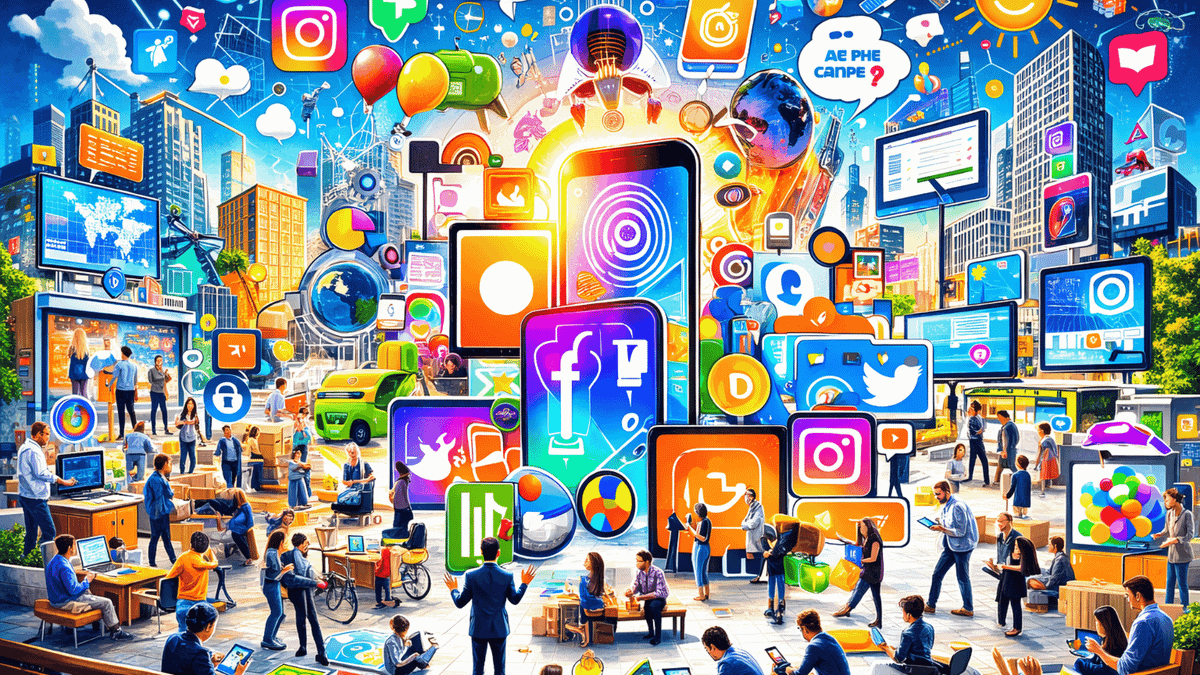
In the 21st century, however, American’s have witnessed the public square extend beyond the living room and broadcast media platforms to places that would have looked like science fiction at any point during the first 225 years of America. Mediated by advances in new technologies such as mobile devices, social media, online payments, content creation tools, digital marketing, and online analytics, the public square has reconstituted itself digitally and deposited itself into our pockets. Through mobile phones and personal media choices, the public square has become modern and dynamic. American’s no longer share a common physical reference point like a television or newspaper front page to experience the public square.
The new technologies that have digitized the public square are largely the same technologies that were designed to personalize digital consumer experiences– shopping, financial transactions, marketing, entertainment, leisure, and communications. As these technologies have taken root in the democratic processes, they have personalized your political experience and given rise to a much larger industry of businesses, political professionals and news sources seeking to capture your attention in much the same way that businesses seek you out as customers – all the time and profitably. They don’t want your attention to spend money on new phones or to watch the latest movie, they want you to vote and advocate for their form of…gulp, government control. Depending on your own circumstances, this can be ambiguous, exciting, or stressful. But what I hope you believe is that the source of technology and the industry participants fueling this change can also empower the progress of American individuality. That may not be the conventional wisdom, but that is why America needs full stack voters. In a seminal post on this site, I describe the new ‘backend’ responsibilities of citizens to understand the usage and business purpose of these new technologies defining our modern public square. Core to that skill is tracking how the Modern Public Square has become a Personalized Digital Hypermatrix.
The technologies forming this personalized digital hypermatrix have had the incredible benefits of increased democratic participation and reduced information asymmetry. But it’s important to be aware that these tools now mediating public participation are designed for, or powered by, a desire to offer you a different kind of superpower than American liberty – they offer the power to shop. Shopping doesn’t sound like a superpower. But imagine what our ancestors, who spent much of their day farming, hunting, and cooking so they could survive, might think about your ability to summon a week’s supply of groceries directly to your front door with the push of a few buttons on a magical device you carry in your pocket. They would think you have superpowers. Shopping is not the sole superpower or even the intended purpose of many of these technologies. Google invented Search to make the worlds information more accessible and elevate human knowledge – and they succeeded. But Google did finance their innovation by optimizing its services for digital advertising and analytics and online shopping. Apple invested in mobile phones to empower communications and connect people across the world – and they succeeded. But the innovation and growth were financed by embedding a store on these devices that enabled more shopping. Adobe invested in creative technology to empower people to create beautiful experiences and empower individuals with tools once only available to large organizations. And they succeeded. But those creative experiences are largely produced to support commercial transactions or advertising products and services. When success is driven by shopping, shopping tends to influence the kind of success – and usefulness – these technologies offer.
The technologies that have emerged in the 21st century offer one distinct new feature that has greatly contributed to their business value and mass spread in business and, subsequently, the modern public square. That difference is that success can be measured precisely through direct contact with individuals. For juxtaposition, 20th century television and radio are one-way directional communications mediums. The news was broadcast, and the audience watches and listens. New 21st century commercial technologies invite participation in the news, with swiping, touching, clicking, responding, sharing, and viewing from a device where they have logged in and identified themselves. This has shifted the focus from measuring the utility of technologies based on estimates and surveys of large groups of people to a focus on (your) specific individual actions and preferences. This technology tidal wave has become personal, and producers of the technology have thrived and continued to provide more choices and features.
There are two reasons why it is important to understand the shopping genesis of digital technologies before exploring their use to advance our Full Stack Voting skills. The first reason is how personalization works and the second is how commercial competition works.
Digital personalization is a technology industry term for a type of customization and involves tailoring a service or a product to accommodate a specific individual, sometimes tied to groups or segments of individuals. The goal of personalization in commerce is to improve customer satisfaction, sales, digital marketing, and advertising. Personalization is used in social media and digital commerce to offer recommendations of content and products and is entering every sector of society, but its genesis use is commerce. We rely upon common experiences to share the world around us and in the digital world those experiences are becoming less and less common.
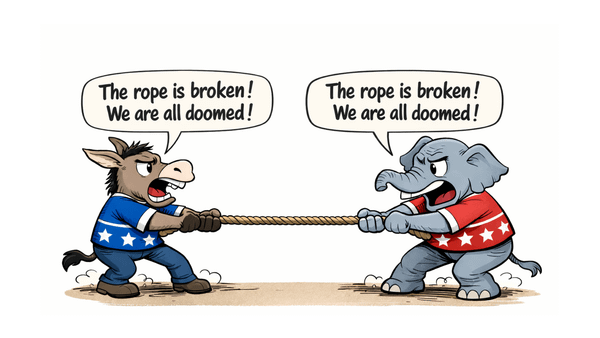
Commercial competition is the second new element introduced through the digital public square. As businesses have deployed 21st century technologies their primary purpose has been growth – growth in profits, revenues, and customers who benefit from the technology. Businesses attain growth by claiming a greater share of the available dollars spent and customers in their marketplace. The business term is ‘market share’ but sharing is never the goal. For example, Cocoa Cola has 46.3% market share of the soft drink market and Pepsi has 25.6%. They share the market, but they compete like hell to take it away from each other. Businesses use these new personalization technologies to create a feedback loop to compete for your attention to shop, transact, and grow. The significance is that these technology tools are designed and managed to help win customers and ignore non-customers. If a customer wants to buy a Pepsi instead of a Coke, Pepsi wins, and Coke loses. If an individual doesn’t want to drink soda, they can be excluded from the databases and algorithms and ignored. This is simple in a shopping context, but not as simple in the public square. The republicans and democrats compete in an election and there is a winner and loser. But when the election is over, the republicans and democrats must govern together. There is no such paradigm in commercial competition. Pepsi and Coke don’t have to make decisions on behalf of all the soda drinkers and non-soda drinkers in their ecosystem. And the technology tools that provide all this new insight and personalization weren’t designed to help them do that. What happens when democrats and republicans use the same technology? They will use the technology for what it was designed for – promoting their version of soda - Coke or Pepsi. And they will get good at it. But what happens when they don’t have equally powerful tools to help them govern together or govern each other? That’s where commercial competition becomes problematic and a reason why America needs full stack voters.
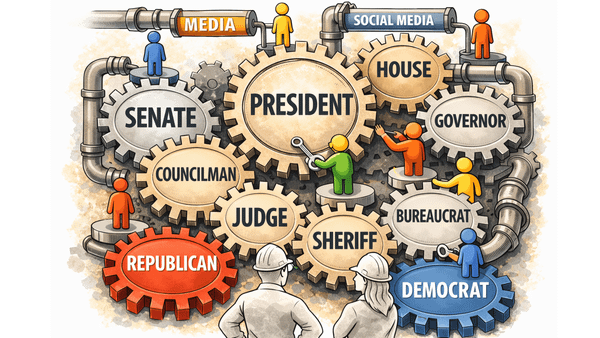
In shopping, these two characteristics have very clear and beneficial roles. In democracy, they also have roles that are beneficial, but the application is different and, more importantly, the psychographic effect can be counter-productive to the collaborative machinery of democratic governance. Personalization and commercial competition are conditions of the digital universe. But as a baseline concept for full stack voting, it’s useful to understand that the modern public square has evolved from a shared synchronous experience with common physical and experiential traits to an asynchronous personalized digital hypermatrix based on individual participation, medium choice, and algorithmic management. That may sound like abstract technobabble for now, so suffice it to say that the Public Square your neighbor experiences is different than the one you experience. Many Americans understanding this is happening but It is not as simple as regional or partisan preference. Understanding the details of how this works is a core goal of the back end of full stack voting. In future pieces, we’ll explore how basic technologies such as email, text, content algorithms, analytics, digital design, advertising, search, media and AI shape your own personal hyper matrix and, more importantly, how to modify that experience so you can understand and relate to Americans who may have a different public square experience.
#Tech #Civics