Say the ‘F’ Word
Free Speech is a skill
Free speech is a skill
Snowball was an eloquent pig with a passionate vision for the future of the farm. He was the hero of the Battle of the Cowshed, a significant event in George Orwell's 1945 novella "Animal Farm,” when the pigs, horses, sheep, and a donkey thwarted an attempt by Mr. Jones to reclaim the farm with sticks and guns. Snowball also had big ideas to build a windmill that would ease the animals' workload and help with the advancement of the farm. He was eager to engage with other animals and openly debate his nemesis, Napoleon, the Pig, who was opposed to his windmill plan. But Snowball was naïve, and he didn’t listen carefully to the other pigs and that was ultimately his downfall. Snowball was driven from the farm by Napoleons’ trained dogs and made a scapegoat for all the farm’s future problems.
Snowball's character plays a pivotal role in "Animal Farm," exemplifying how ideals can be overtaken by power struggles and propaganda. In literature and in real-world politics, it's not uncommon for individuals with more idealistic and less Machiavellian tendencies to be blindsided by those who are focused on pure power and willing to employ any means to achieve it. We know that George Orwell wrote "Animal Farm" as a political allegory that reflected events leading up to the Russian Revolution of 1917 and the subsequent era of the Soviet Union, particularly the rise of Stalinism. Snowball represents the idealistic Leon Trotsky and Napoleon the dictatorial founder of the Soviet Union, Joseph Stalin.
Following the revolution against Mr. Jones, the farm animals are suddenly able to express themselves more freely, expose long ignored problems and sing songs celebrating their freedom. But as the story progresses, many of these freedoms gradually diminish as well-organized authoritarians take advantage of these freedoms for dictatorial gain. Americans in the 21st century, newly empowered to express themselves more freely through the digital public square and expose long ignored problems and celebrate their freedom of expression are similar in their enthusiasm and perhaps also their naivety. The opportunity for speech in the digital public square is unbounded, but Americans will want to re-learn how to listen in this new medium to seize the opportunity and avoid compromising their rights, like Snowball the pig, to real dictators and would be fascists who see the world as Napoleon the pig did. The key for Americans – and full stack voters - is not to just exercise more of their free speech blithely. American free speech is absolutely overpowered and that is easy to do. The key is to re-learn how to listen to all that speech so you can ensure individual liberties are exercised with the excellence required for those liberties to endure.
The ‘F’ Word.
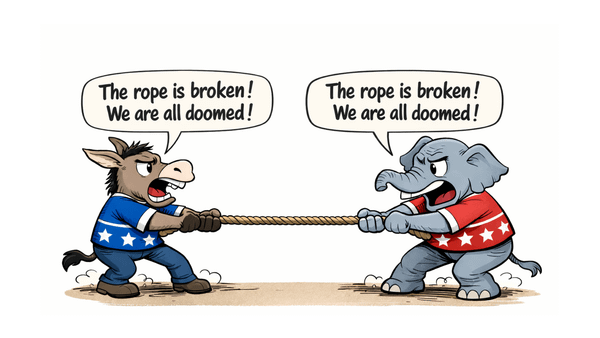
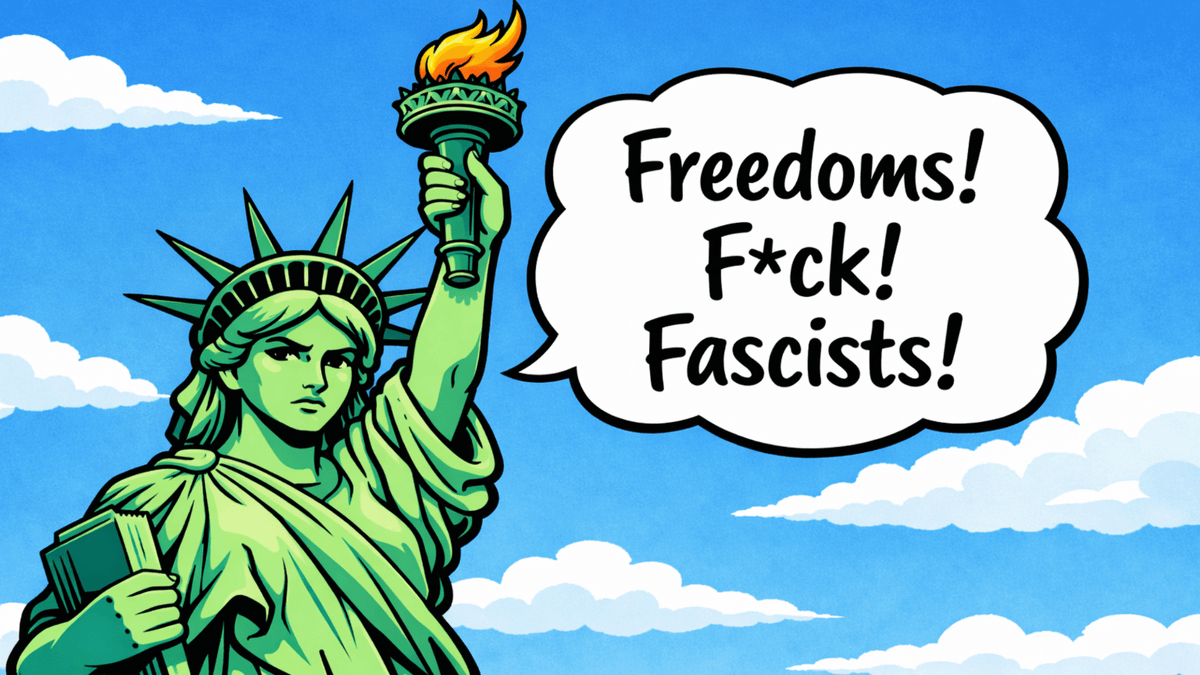
America is not Animal Farm. But Americans certainly can be both naïve and nonchalant about our invaluable free speech. Anyone with a social media account can speak truth to power and garner audiences in the thousands. What a contrast to Thomas Paine and his bar-hopping pamphleteering. That ability to say anything, anywhere has changed the norms of free speech. Consider this, during the 2022 congressional election cycle President Joe Biden and former President Donald Trump called their opposing political parties fascists. This is new territory for America, having its most recent two heads of state hurl this accusation. Fascism traditionally refers to nationalistic ideologies that arose in early 20th-century Europe, particularly in Mussolini's Italy and Hitler's Germany. Fascist regimes are typically characterized by dictatorial power, extreme nationalistic sentiments, the suppression of opposition through intimidation and censorship, and a belief in the natural supremacy of a particular nation or race. Were a 20th century American able to time travel to 2022 and hear a U.S. President label American citizens as fascists, they would undoubtedly be stunned. That would be the political equivalent of the ‘F’ word. But things have changed, and this is but an example of a trend where free speech is pliable and contextual. We must learn to listen with new skills required by 21st century technologies.
The practice of calling someone who disagrees with you a fascist demonstrates a misunderstanding of free speech. Fascists don’t disagree with you or run against you in an election. They kill you; they imprison you; they hurt you; and they intimidate you with the threat of more of the same. Disagreement is a gift of free speech. If an American thinks that someone who voices their disagreement with their point of view is a fascist, then they are failing to understand what free speech is. And, making it hard to identify real fascist behavior from public servants.
In America, free speech is a right and a skill.
The right is guaranteed by the first amendment to the United States Constitution. Speech is one of the five freedoms of the first amendment, in addition to the right to peacefully assemble, the right to petition the government for change, the right to free exercise of religion and the right of the free press.
The skill of free speech is why the American version is overpowered. Implicitly, Americans know they cannot just say whatever they want. Yell ‘fire’ in a crowded movie theater and you may lose your freedom for committing the crime of reckless endangerment or disturbing the peace. Make a false claim about a product you are selling, and you may be charged with fraud. Threaten the President’s life and you may get an intimidating visit from the U.S. Secret Service. These are obvious restrictions on free speech. But the sheer volume of legal interpretation on non-obvious restrictions of free speech would leave you speechless.
The first amendment is 45 words long. If we could print off every page of interpretative case law about the first amendment –the written court decisions related to conflicts based on the first amendment – you would have a pile of paper that reached seven to eight stories high. That case law represents nationalist expertise on the nuance of free speech. The U.S. Supreme court alone has issued decisions on a wide range of First Amendment issues, from symbolic speech (like American flag burning) to religious displays on public property, campaign financing, obscenity standards, and more. America as a nation is obsessed with free speech. America is obsessed with ensuring every citizen is allowed to challenge government authority and no exceptions can be made that would allow authorities to restrict that speech. It is a deeply rooted national skill to plumb the depths, and the minutia of how free speech should be protected and celebrated. And one reflected by the citizenry. Americans know how to express themselves, arguably better than any citizenry of the world. In the 21st century, that free speech skill is let loose on the world through new digital technologies.
And the modern public square is threatening that skill. Because Americans must learn to speak and listen anew. Let’s consider again at our U.S. Presidents hurling the “F-Word” at each other. Hopefully we can all agree that a U.S. citizen who openly disagrees with you is, by definition, not a fascist. It’s the leader who says nothing and then has you pushed out a window for something you said who is the fascist. Neither Biden nor Trump likely thought the opposing party is fascist. But they thought saying so would help them capture more votes and is excusable because the context of the speech was a rally designed to motivate their supporters. And certainly not the same as making an official statement from inside the White House. That nuance may sound more like an excuse than explanation but that’s the challenge with context and speech. If you steal the last piece of pizza and I joke, ‘do it and I’ll kill you’ it’s very different than if I say ‘I’ll kill you’ as I stand in front of you with a gun. Context matters. And truth be told, I think partisans in America are abusing context and the skill of free speech in our new modern public square because the citizenry hasn’t figured out how to hold them accountable. As speech is widening from sharing and liking to grand creative expressions by individuals with creative tools, the context of speech is always changing…and we aren’t always sure why or who is behind it. This is why America needs full stack voters! In the meantime, go ahead and ‘say the f word’. Enjoy your free speech! And consider how you can develop the skill of American free speech in the digital world.
#Speaking #Civics