Blame the DMV
The civics of American’s election obsession
At the end of the 1980s, Americans didn’t care much about voting. America was ascendant. The rise of U.S. based technology innovation, pop culture, consumerism and national economic and military strength characterized a U.S. position that was rooted in individuality. Throughout the 45-year global cold war against the more stringent and institutional U.S.S.R, Americans viewed themselves as the more creative, expressive, and permissive culture. And that enabled greater equality and prosperity than the more disciplined central authoritarian regimes with express goals for equal prosperity. American’s felt like winners.
At the beginning of the decade, it didn’t look like America would win much of anything. America looked weak. Iranian militants flaunted American power by holding 56 hostages from the U.S. embassy for 444 days. Athletes from the U.S.S.R dominated the 1980 Moscow Summer Olympics as U.S. athletes stayed home as a part of an international boycott of the summer games in response to the U.S.S.R. invasion of Afghanistan. And the U.S.A. endured a major recession with record high unemployment and high inflation. But the American experiment prevailed and by the end of the decade, American economic prosperity and military might was unmatched and a wave of democratization spread across Eastern Europe. The great symbol of communism, the Berlin Wall, fell on November 9th, 1989, signaling the beginning of the end of the decades long cold war between democratic and communist nations and the U.S.A was undoubtedly the most valuable player in the quest for ideological victory. Americans were pleased and they also lost interest in politics. Barely 50% of Americans turned out for the 1988 presidential election continuing a downward trend in political participation throughout the decade.
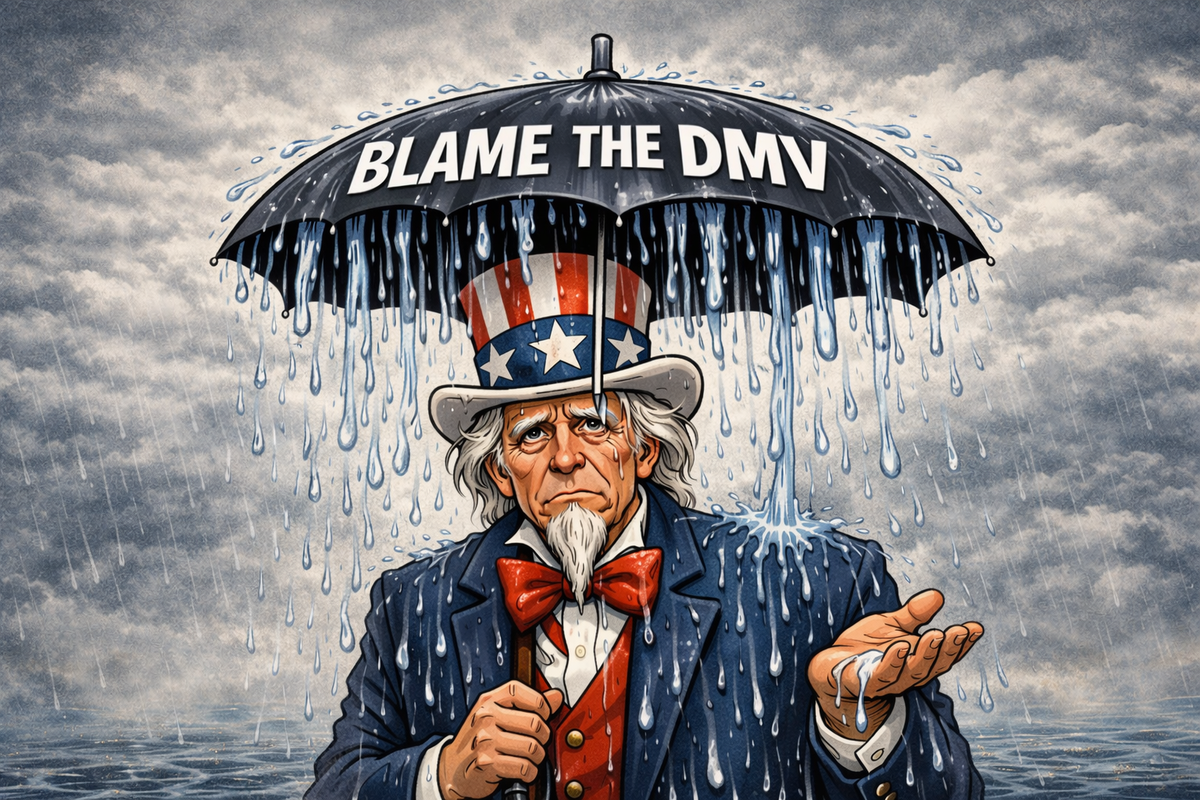
In 1993, responding to the historically low rates of voter registration, the United States Congress passed the National Voter Registration Act, commonly referred to as the “Motor Voter” law. Motor Voter required states to allow citizens to register to vote when they applied for their drivers’ licenses. The law also required states to offer mail-in registration and to allow people to register to vote at government facilities offering public assistance. In the first year of its implementation, more than 30 million United States citizens completed their voter registration applications or updated their registration through means made available because of the new law. Interest in U.S. elections was so low in 1993 that the United States Congress – one of the most powerful democratic institutions in human history - literally turned for help to one of the least popular government institutions in American history, the Department of Motor Vehicles, also known as the dreaded “DMV”. But the DMV delivered.
If you were alive and aware of electoral politics during the 1980s and 1990s, you may also remember that the interest in elections was different than it is today. The national news media covered elections regularly for a few months before presidential election day every four years. Elections were largely ignored in odd numbered calendar years because those years lacked elections. Political news was prominent but, if it covered elections, that coverage focused on the elections occurring outside the U.S.A. Twenty four hour news coverage was available but nascent. You may also remember that voting only occurred on the first Tuesday in November and that the best way, perhaps the only way, to know your neighbor’s political preference was if your neighbor erected a yard sign or posted a bumper sticker with a candidate’s name. There was little chance you would be solicited for a campaign donation unless you also owned multiple homes with four garages and ten bedrooms each. In fact, even if you weren’t aware of the political culture in 1993, if you have been paying attention to politics for the last 15 years, you probably do remember a time when election politics weren’t a topic of the news every day of the year.
If you are new to following politics, then consider that it was just a few years ago that the commercial media didn’t cover mid-term elections or primary races with the ever-present vigor they do today, and social media coverage didn’t exist. Early voting was largely a privilege reserved for citizens with excused absences. And if people were using digital tools, they were more likely to be sharing cat videos than political points of view and certainly not making financial contributions to a preferred candidate.
Towards the end of the 20th century, an American’s right to vote safely and equally was increasingly taken for granted and the subsequent voter apathy prompted Congress to enact the Motor Voter law in 1993. The late 20th century was a remarkable period of enfranchisement and individual voter protection beginning with the voting rights act of 1965 that outlawed discriminatory voting practices targeted at individuals long denied equal voting access. This landmark legislation was followed by voter rights extensions to young adults ages 18-21 (1971) and protections for language minority voters (1975) and people with disabilities (1982). For the most part, Americans assumed they had an individual right to vote and held varying degrees of interest in exercising the right to choose their elected representatives.
During the 20th century, Americans also witnessed the public square of democracy extend from the newspapers and townhalls of 19th century America into their living rooms through broadcast media. Radio and television provided greater access to political debates and advertisements and wide scale big money political campaigns. Yet mainstream interest and engagement in politics rarely extended beyond the months preceding the Presidential election every four years and even then, there was enough apathy to prompt Congress to draft the Motor Voter law in the 1990s.
In the 21st century, however, American’s have witnessed the public square extend beyond the living room and broadcast media platforms to places that would have looked like science fiction in 1993. Mediated by advances in new technologies such as mobile devices, social media, online payments, content creation tools, digital marketing, and online analytics, the public square has reconstituted itself digitally and deposited itself into our pockets. Through mobile phones and personal media choices, the public square has become Modern and dynamic. American’s no longer share a common physical reference point like a television or newspaper front page to experience the public square. The engagement in politics has rapidly extended beyond the traditional election cycle and to a point that would likely amaze the members of Congress who enacted the Motor Voter law in 1993. And the result is that election apathy has given way to election obsession. At the conclusion of the 2020 election, candidate polls were already being conducted to determine national favorites for 2024 to satisfy constituent interest. In 2025, online betting markets began taking bets on 2028 presidential nominees. The individuality in elections has an entirely new meaning in the age of personal digital technology, from individual enfranchisement and national standing to identity and polarization. Much has changed in the past two decades with how American’s experience elections and politics and it has happened quickly and furtively. America needs full stack voters to understand those changes, but first among them is to know that we can always resort to blaming the DMV!
#Civics #Tech