American Decision Making 101
There are two reasons American decision making is amazing and three reasons its hard
There are two reasons it’s amazing and three reasons its hard
A viral video from 2013 shows the arrival and departure of Kim Jong Un, the dictator of North Korea, to the Yellow Sea Islands of Changjae and Mu, near the border with South Korea. As Kim Jong Un tours the islands, North Korean citizens and soldiers are overjoyed and hysterical. They cry and cheer, arms flailing. They praise his bravery and commitment to their protection. As he departs by a boat on the beach, the North Koreans follow him through the icy cold surf, some carrying small children, and crying in a fervor of adoration and obedience as he rides off into the sunset. The video is staged propaganda and the citizens are acting for the cameras to prove their loyalty and demonstrate their submission to the Great Leader. These types of propaganda videos are common in North Korea and unsettling for Americans to watch because the participants are so clearly over-acting out of fear of punishment if they fail to show fealty to their sovereign. Kim Jong Un is possibly the most brutal authoritarian on the planet. Freedom House consistently ranks North Korea as the lowest country with 3 out of a possible 100 points in its Freedom in the World rankings. North Korea’s 26 million citizens, that’s more than live in the state of Florida, make no decisions about their government. The decisions they make are about how they will act – or overact - like loyal subjects so they can avoid state sponsored repercussions. To Americans, the decision-making rights of North Koreans would look more comparable to the decision-making rights of American pets than their own rights. North Koreans simply do not have decisions to make in the matters of government and politics. The tragic state of North Korean political rights represents a stark contrast to the rights of American citizens who have more decision-making authority than any citizen to ever walk the earth.
Americans generally appreciate their exquisite right to vote even if they don’t fully grok how vast their opportunities to vote and vote more frequently than any other citizens may be. American’s overpowered free speech and the vast number of ways Americans can express themselves which increase exponentially with the growth of modern technology is barely understandable and a major focus on this site. Voting and free expression are American’s most important decision-making tools. They make Americans powerful. But Americans also have the right to make decisions, more decisions than any citizen, ever. Specifically, these are hiring decisions. As a representative democracy, every single leader in America is a public servant. Every single leader in America serves at the pleasure of the citizenry and is accountable to the people. The American founders were principally focused on eliminating the role of a king or queen or dictator. They would not be surprised by the concentrated power of Kim Jong Un in today’s North Korea because authoritarianism was the default form of government until the U.S.A innovated democracy as a viable long-term alternative. To enable their vision of democracy, the founders conceived a system that created a separation of powers dividing the responsibilities of a government into distinct branches that prevent any one group or individual from gaining too much power. But they also created a system of checks and balances to ensure that the separate powers could meddle in each other’s affairs to ensure no one group gains too much power. The net effect of these doctrines today is that you – the American Citizen – have a lot of decisions to make about how to hire your political leaders and manage them effectively. The Modern Public Square has made it harder for you to hire and manage well while making it easier for your public servants to ignore the separation of powers, embellish their accomplishments and hide their missed assignments from you, the citizen overseer. The mashup of rights I will label as ‘Deciding’ is designed to help you, and your fellow citizens, understand why that is and how you can be a great decision-maker, which is critical to being a full stack voter.
American Political Decision Making
In our system of checks and balances and separation of powers, there are two reasons why American citizen political decision making is amazing and three reasons why it is difficult.
Completeness
The first reason why American decision making is amazing that it is complete. By complete, I mean you, the American citizen, always have some ability to oversee political decision making in any domain of the U.S.A. It may be direct (through voting) or indirect (through free speech) and it may seem attenuated, but you have it. (It may also be achieved by becoming a public servant yourself). There is no codified theocratic or hereditary or dictatorial decision making in the United States of America. All power arises from the U.S. citizen, which means the broad will of the American people is interpreted by public servants, not possessed by them. On this point, I think the U.S. Constitution & Bill of Rights are extraordinary and easily taken for granted or bemoaned without an appreciation for the layers of political decision making and government expertise that America has evolved. When these documents were created, it was literally world changing. Up until then, most every world doctrine in history detailed what the government was allowed to do to its people, but the American documents detailed what the government was NOT allowed to do. Outside of the Magna Carta (to some extent), this was a first of its kind doctrine and established a principal that power and decision making belonged to the people unless or until the people assign decision oversight to another citizen who is held accountable to the people. We may take this fact for granted today but there is nothing on earth that has met the completeness of American political decision-making power by its citizens nor the depth of these decision-making systems. Mastering the details of the comprehensive power is a worthy full stack voter objective.
Innovation
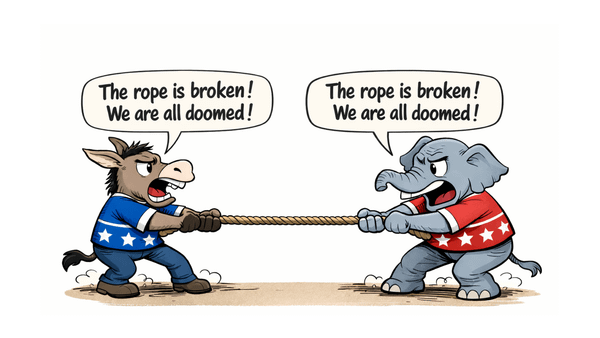
The second reason American decision-making power is amazing is the room for error and experimentation which leads to resiliency and innovation. By separating power so broadly, the founders ensured that American citizens could vote and express themselves virtually risk free. No one decision you make is going to bring about the end of the world as we know it - no matter how much the partisans try to convince you that is the case. You can vote for candidates and policies that may fail. Failure is a powerful teacher and builds resilience. Trial and error is a fundamental method in innovation. Many groundbreaking discoveries and inventions were the result of repeated failures and gradual improvements. Without the willingness to try and fail, progress and innovation would be severely limited. Each experiment, whether it succeeds or fails, contributes to a deeper understanding, and often leads to unexpected solutions. Remember this as I describe why decision-making is so difficult. The American system has built in bumper rails to mitigate risk and make sure you don’t go in the gutter.
There are also three reasons why American’s political decision making is difficult. The first is that it is not always clear what decision you are making. The second is that it is not always clear how to evaluate the success of your past decisions. These two difficulties you can learn about in any civics textbook, but it’s the third difficulty that is the focus for full stack voters and that is how the digital public square confounds your decision making with additional digital propaganda from the partisans and foreign adversaries that makes the first two difficulties even more difficult. In the era of the digital public square, the word propaganda isn’t used much. Instead, the word that is used is ‘misinformation’ which exemplifies why the third difficulty is so difficult as context and intent are required to understand the difference between propaganda and misinformation. This third difficulty can have an exponential impact, I’m going to explain the first two difficulties, so we have a common framework and understanding for the impact of this third increased 21stcentury decision making challenge.
Clarity
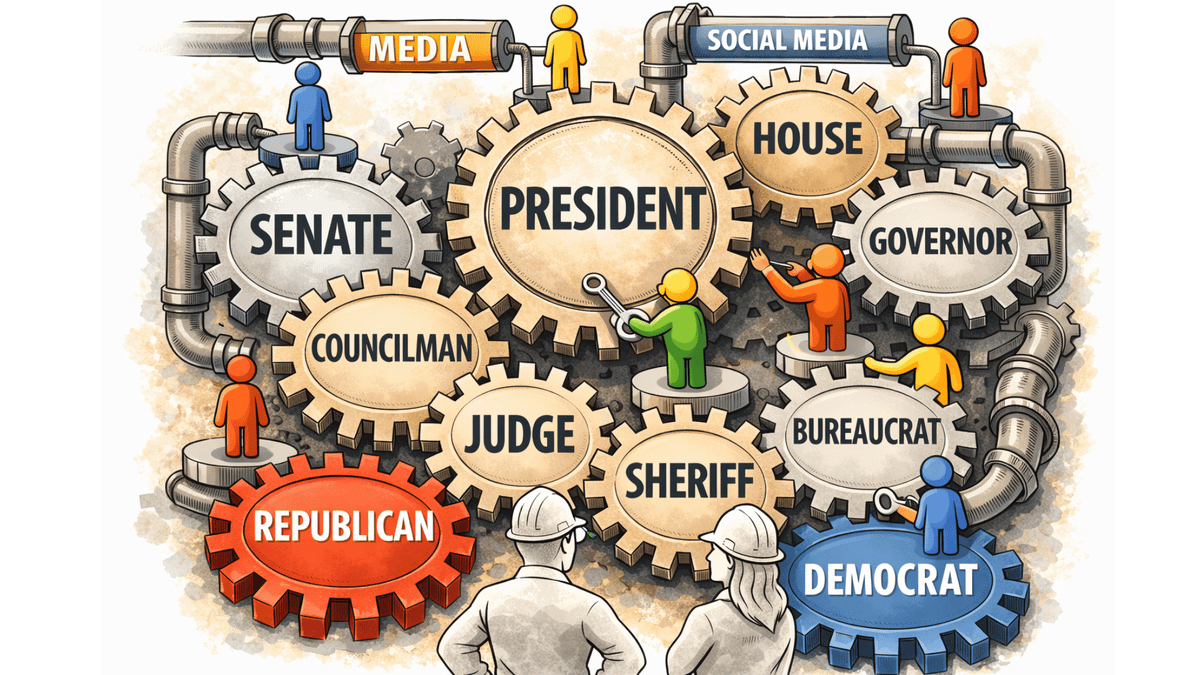
It’s not always clear what ‘political’ decision you are making when you vote or express yourself with your first amendment rights. The most important decision you make is hiring – voting, speaking, volunteering, donating in favor of a candidate – you hire - who will represent your interests. There are many more decisions implicit about the policies you want to support, but for simplicity’s sake we’ll focus on the decision to support a certain candidate and call it hiring. That is complicated enough. When you vote for someone, you may vote for that person because they support a policy you favor, because you dislike the alternative candidate, because you want a change or because you don’t want a change. But you are also deciding to hire that candidate to make decisions on your behalf on a myriad of topics you have not considered or may not value. Invariably that candidate will make decisions on your behalf that you don’t like. Politics is messy and my intent is not to clean up the mess. Think of hiring a candidate like hiring a grocery shopper – it sounds extravagant, but delivery apps are making this more common so work with me on this. If you hire a personal shopper to buy all your groceries for a year, they may come back from the store with a few broken eggs and some brands you don’t like. But if they come back regularly with sufficient groceries, you likely made a good decision. Similarly, if you vote for a political candidate and they fulfill the duties of their specific office on a regular basis, then you will be happy with your decision. If they don’t fulfill the duties of their office regularly, then it should feel the same way it would if your grocery shopper came back with clothes and hardware supplies instead of food. Of course, the shopping example is easy, we all know the difference because we can’t eat hardware supplies. But with hiring public servants it’s not always clear what to expect differently from decisions about hiring Congressman, Governors, Presidents, local politicians or even Republicans and Democrats. Hiring in American decision making is hard because it’s not always clear what job it is you are hiring for.
Accountability
The second reason why American decision making is hard is because it’s not always clear how well our previous decisions worked out. For the most part, the public servants you hire will claim they did a great job and should get an outstanding performance review while their political opponent will say they failed entirely and deserve termination. The political parties amplify this point of view. The political media reports on the political race rather than the details of governance. There are many great independent organizations and watchdog groups that track the performance of public servants, but my guess is that information doesn’t break through. Using the example above, the person you hire to shop for your groceries will brag that they fed you perfectly for a year and the other side will claim they brought you rotten food, or no food, or clothes and hardware supplies. It can be challenging to determine if a public servant fulfilled the duties of their office so it’s hard to know how good your decision-making skills are. Fortunately, we have a U.S. Constitution which is effectively our employment manual. It’s written in archaic legalese so not easy to grok but either are employment manuals. I’ll introduce in later posts some basic concepts from the Constitution that you can treat like job descriptions and performance reviews as you consider how to make your hiring decisions.
Transparency
The third reason it’s hard to make decisions in America is that the digital public square was designed with technologies that amplify the two challenges listed above. Research by Stanford scholars has shown that voter behavior and decisions are influenced by a variety of factors, including geographic and generational distinctions, messaging, framing, and the demonstration of empathy in political discourse. This indicates that voters' decisions to reelect officials may be influenced by how well these factors align with their personal beliefs and the effectiveness of the candidates' communication strategies. In other words, decisions rely upon perception and personalization rather than obvious performance of civic duties. The technology forming the digital public square was originally designed to help personalize messages for consumers to compete on digital perception. Partisans, interest groups, even foreign adversaries have become expert in the commercial skills to help influence your vote and free expression in the digital public square. They are using those skills to influence your decision making. They can do this through positive persuasion – ads, content, analysis that suggests a given candidate has performed perfectly. Or negative tactics to terrify you that a given candidate is unfit for the job. My guess is you know this is happening and that’s why you are reading the Full Stack Voter! But what is particularly difficult about this behavior in the modern public square is that the massive year-round increase in political campaigning has obfuscated our understanding of the actual duties our public servants are supposed to do. In fact, the perpetual campaign to persuade you to make decisions about your vote and your speech seems to have distracted public servants from meeting their most basic duties or even knowing their most basic duties. For example, the last time the United States Congress passed a budget on time - this means that all 13 appropriations bills were passed and signed into law within the fiscal year - was September 30, 1996. The U.S. Federal budget represents the largest single source of wealth and prosperity in human history; it’s a big responsibility with a lot of dependencies and it’s your responsibility to hire three of the 535 representatives in Congress that can pass a budget on time every year. It is the most important duty all our Congressional representatives share each year. And each year they fail to issue it on time. But you probably won’t hear about this in the modern public square anymore because it’s boring and the participants are busy personalizing the digital content, so you stay engaged on specific topics that earn your clicks and swipes – like the drama of impending government shutdowns or policy battles that delay on time budgets. The modern public square has favored a cacophony of positioning statements and titillating partisan competitions that provides great entertainment but not much utility towards managing our public servants to perform difficult and often boring jobs. Promise is more interesting than performance. Personality and conflict are more shareable than the grinding detail of government managerial work. It makes sense but this makes political decision making difficult and will be a major focus of the Full Stack Voter. If you can see through the digital noise and identify true performance or failed performance, you will become a powerful and influential full stack voter.
#Deciding #Civics